
Simulation-based medical education: How faculty can improve high fidelity of training
Simulation-based medical education: How faculty can improve high fidelity of training
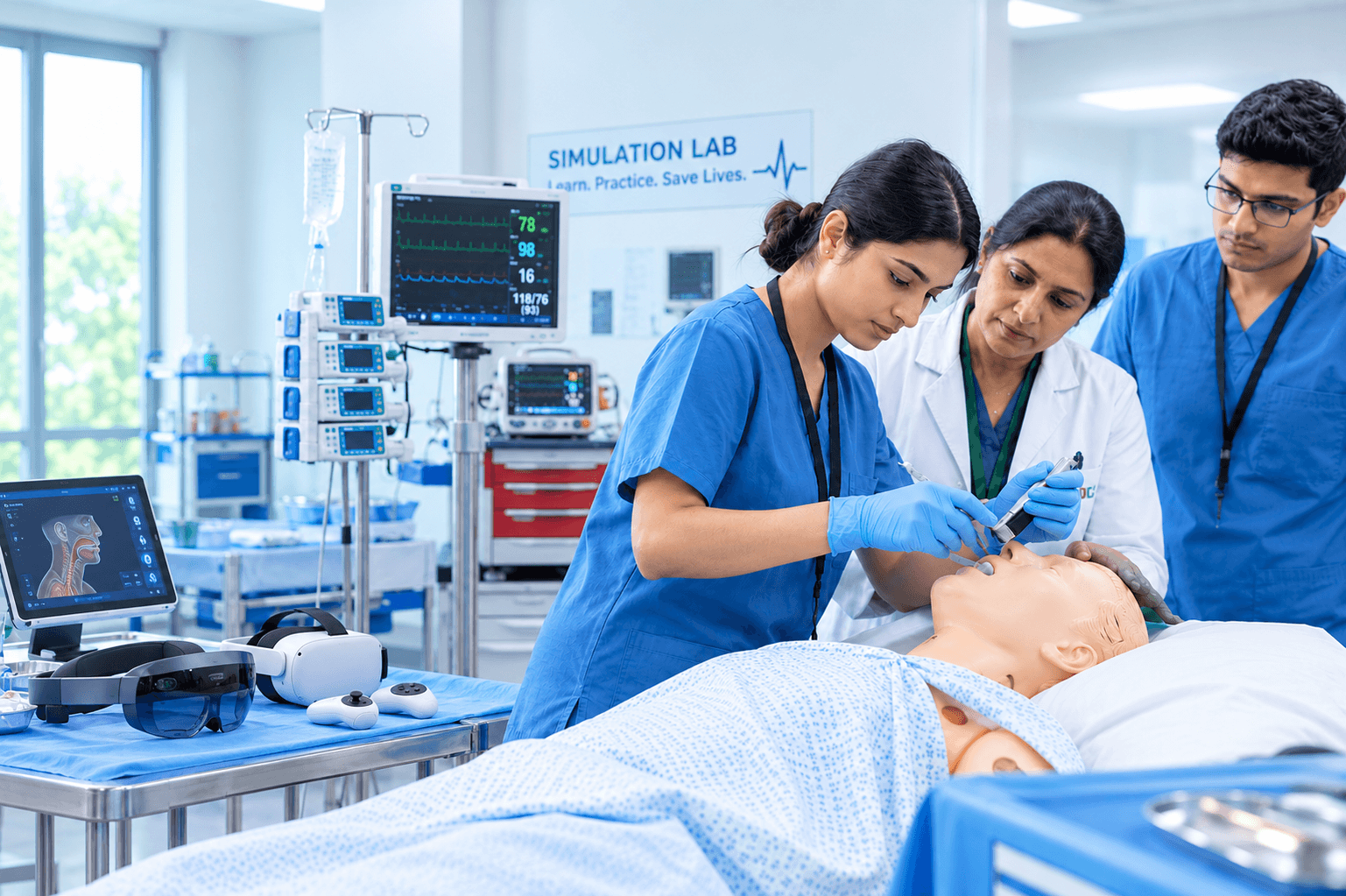
High-fidelity simulation (HFS) is an ultra-realistic, immersive training or testing methodology that closely replicates the physical, functional, and psychological aspects of a real-world environment. It uses advanced technology to provide highly accurate, interactive responses to user actions. Numerous studies have attempted to measure HFS's influence on learning outcomes, yet the absence of a consistent definition of "high-fidelity" makes these findings difficult to compare. Faculty should focus not just on buying expensive equipment, but on carefully designing every aspect of simulation to match the intended learning goals.
Understanding Fidelity Before Investing in It
Fidelity is multi-dimensional, corresponding to the degree of realism achieved through the simulation equipment, setting, and scenario. The three primary types are physical, conceptual, and psychological, with functional fidelity describing the precision required for psychomotor tasks and sociological fidelity describing how interactions among participants affect realism in interprofessional exercises. In practice, physical fidelity refers to how the simulator looks and feels; conceptual fidelity to whether the scenario's clinical logic holds together (for example, vital signs that respond sensibly to treatment); and psychological fidelity to how far the exercise evokes the stress and emotions of a real clinical encounter. Importantly, learners tolerate lapses in physical fidelity, an imperfect mannequin or a missing prop, far more readily than lapses in conceptual fidelity, where the scenario itself must make clinical sense. This has direct implications for faculty time and budget: securing conceptual fidelity through content-expert review and pilot testing of a scenario matters more to learning than upgrading hardware. High-fidelity manikins are advanced, computer-driven simulators designed to replicate human anatomy and physiology. These manikins are typically categorised by patient demographics and clinical scenarios. Manikins are commonly grouped into four main categories:
1. Adult Patient Simulators: Designed to mimic full-sized adults for scenarios like heart attacks, strokes, trauma, and mass-casualty events.
2. Paediatric and Infant Manikins: Replicate the specific anatomies, vital ranges, and physiologies of children and newborns. Examples include models designed specifically for neonatal resuscitation.
3. Birthing Manikins: Simulate the entire labour and delivery process, allowing teams to manage complicated childbirths and postpartum haemorrhages safely.
4. Surgical and Trauma Simulators: Focused on specific procedures. They offer localised haptic realism and tissue layers for laparoscopy, suturing, or emergency haemorrhage control.
Faculty Practices That Raise the Right Kind of High-fidelity Training
Faculty and healthcare educators use simulation mannequins to learn technical, diagnostic, and communication skills. This hands-on training focuses on operating simulator software, mastering scenario design, conducting guided debriefs, and evaluating students in a controlled, risk-free environment without compromising patient safety. Faculty training modules on high-fidelity mannequins are commonly divided into three categories:
1. Technical & Procedural Skills: Educators learn to teach and execute advanced and fundamental medical procedures, including Airway Management, Vascular Access, Resuscitation and Critical Care (such as Basic Life Support), and Patient Monitoring and Basic Care.
2. Clinical Assessment & Diagnostics: Faculty train on how to program and interpret patient changes, such as Vitals & Hemodynamic, Auscultation, and Neurological Responses.
3. Scenario Facilitation & Debriefing: Faculty members master the pedagogical use of the mannequin controls, such as: Instructor Control, Debriefing and Psychological Safety.
Faculty must also guard against the "fidelity trap", the assumption that learning increases in direct proportion to realism. Higher fidelity can raise cognitive load to the point of overwhelming a participant, particularly a novice, and thereby reduce learning. The level of fidelity should instead be calibrated to the learner: low-fidelity simulation builds knowledge, mid-fidelity builds competence, and high-fidelity builds performance. Faculty should therefore specify the scene setting, simulators, role division, and required drugs in each lesson plan in advance, aligning physical and conceptual fidelity with the same training objective rather than letting either drift independently. Faculty should also sustain the value of that fidelity through structured debriefing, using criteria-based supportive feedback alongside a Context-Content-Course guided model, since omitting debriefing is known to undermine even a well-designed high-fidelity scenario.
What the Evidence Shows
The faculty effort invested in scenario calibration appears to pay off in measurable ways. In a four-month critical-care curriculum, every simulation scenario was tested in advance by senior residents, and a dedicated faculty training session was held to ensure the validity and reliability of the rating checklists used during assessment. With that groundwork in place, residents' simulation performance, rather than their written post-test scores, correlated significantly with their real clinical performance across knowledge, skills, and leadership domains, suggesting that simulation may be a better indicator of bedside competence than a paper examination. Because this is a correlation reported from a single curriculum, it supports, but does not prove, that conclusion.
A separate study of a medical-nursing collaboration course reported significant improvements in students' attitudes toward healthcare cooperation and in several dimensions of critical thinking. These are attitude and critical-thinking measures rather than direct measures of clinical performance, but they were achieved through a curriculum in which every element, from the analysis of contextual factors to the design of feedback and assessment, was deliberately mapped to a single integrated model rather than assembled ad hoc.
Key Takeaways for Faculty
• Invest first in conceptual fidelity: expert review and pilot testing of every scenario.
• Match the level of fidelity to the learner's stage; more realism is not always better for novices.
• Plan the scene, equipment, roles, and drugs in advance, and always include structured debriefing.
• Train faculty in scenario design, simulator operation, and debriefing, not just in using the equipment.
Conclusion:
High-fidelity simulation should not be viewed solely as a function of sophisticated technology, but as the outcome of thoughtful educational design. The effectiveness of simulation-based medical education depends on the deliberate integration of physical, conceptual, functional, and psychological fidelity with clearly defined learning objectives and the learners' level of competence. Faculty play a central role in this process through evidence-informed scenario development, validation by subject matter experts, structured debriefing, and the use of reliable assessment strategies.
As healthcare education continues to evolve toward competency-based training, institutions must recognise that investments in faculty development and simulation pedagogy are as critical as investments in simulation infrastructure. When designed and facilitated effectively, high-fidelity simulation extends beyond technical skill acquisition to strengthen clinical reasoning, teamwork, communication, and decision-making, ultimately contributing to safer patient care and improved healthcare outcomes.
QUICK LINKS

© Chakra 2026 | All Rights Reserved.